Digitalization of production: How robotics and logistics solutions from EF Robotics make your factory future-proof
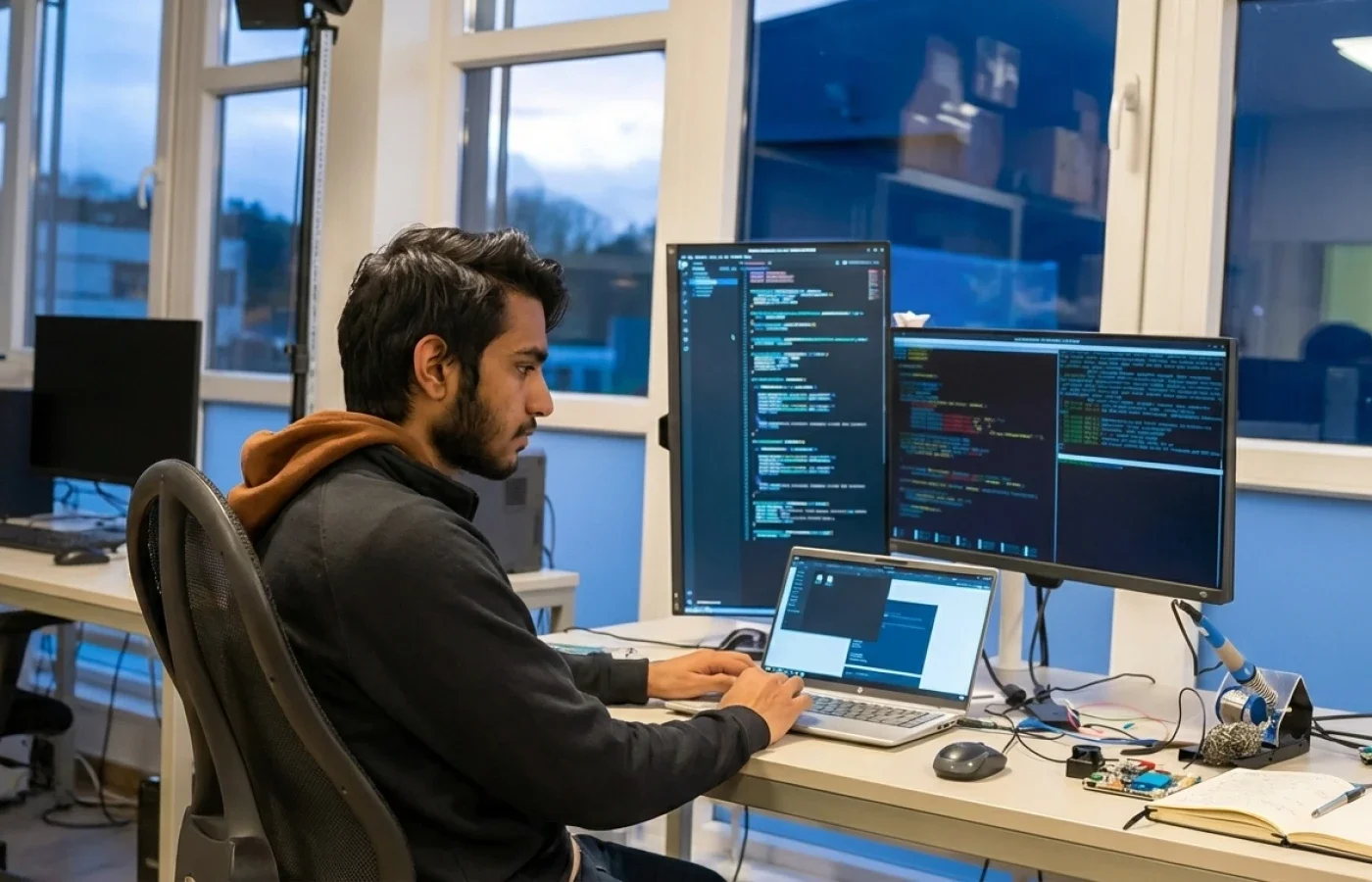
The digitization of production provides companies with decisive advantages. It connects machines, material flows and software to form an intelligent overall system that speeds up processes and reduces costs. Autonomous mobile robots and driverless transport systems take on monotonous transport and relieve personnel. Digital twins simulate manufacturing processes and enable risk-free optimizations, while AI algorithms enable predictive maintenance. As an independent integrator, EF Robotics supports you from analysis to commissioning and develops tailor-made solutions that make your production more efficient and future-proof. This turns your factory into a smart factory that reacts flexibly to market requirements and remains competitive in the long term.
Why digitization is essential today
Die digitization of production It has long since become a strategic imperative. International competitors are already pioneers in many industries, meaning that companies in Germany must act to keep up. At the same time, rising energy costs, volatile supply chains and a lack of skilled workers require a new form of efficiency. modernism Industrial robots and intelligent Logistics robot can automate monotonous work and thus relieve employees, but without networked systems, the benefits remain limited. For medium-sized decision makers, this means that digitization is not a luxury, but the basis for future viability.
The latest studies also underline this pressure. According to Bitkom, more than 70 percent of Germans are already using industrial companies digital applications, while 96 percent of Industry 4.0 regard it as decisive for international competitiveness. Yet only a small proportion have comprehensively automated intralogistics — many companies underestimate the level of automation of their internal transport. This discrepancy results in inefficient processes, high process costs and low flexibility. Here sets EF Robotics by helping companies implement and scale digital technologies in a practical way.
What does digitization mean in production?
Digitalization of production means much more than digitizing analog processes. It comprises connected machines, cyber‑physical systems, digitized intralogistics and data-based business models. The concept of Smart Factory describes a completely networked production environment in which machines, material flows and planning systems communicate with each other. sensors, IoT platforms and digital twins collect data in real time, analyze it and control production processes autonomously. The Boston Consulting Group estimates that Industry 4.0 Could contribute around one percent to Germany's gross domestic product and create hundreds of thousands of new jobs by 2025. For decision makers, this means that digitization is both a growth driver and a job engine.
The basics include four steps: networking, analysis, optimization and Smart Services. Connectivity creates transparency by digitally recording all relevant data from machines, supply chains and warehouse management systems. Based on this information, companies can use graphical dashboards to identify weak points and optimize them in a targeted manner. In the next step, AI algorithms ensure predictive maintenance, load distribution, and self-regulating production. Finally, data-based services enable new business models, such as robotics or FTS systems “as a service.” This structure helps medium-sized companies to divide the complex digitization process into manageable phases.
Benefits for decision makers: Digitized production
Business decisions on Digitalization of production should always be based on clear added values. The most important benefits can be summarized in five points:
- Efficiency and process reliability: Connected robots and AGV robot Take on monotonous transports and increase productivity. A TMG study shows that 94 percent of companies that have automated their intralogistics report positive results. Digital twins minimize risks by virtually simulating processes and thus reducing downtime.
- Relief in case of staff shortages: The shortage of skilled workers is one of the main drivers of automation. Autonomous mobile robots, collaborative systems and AI‑based assistance platforms perform repetitive tasks, while employees can be deployed for higher-value tasks.
- Cost reduction and transparency: Networked production and logistics processes optimize the use of resources, reduce material waste and avoid bottlenecks. Real-time data enables managers to react quickly to disruptions.
- Scalability and flexibility: Modularly designed FTS systems, AMR Robots and robot manufacturer offer solutions that grow with the company. Digitalization makes it possible to change production lines quickly and integrate new orders without long downtimes.
- Sustainable systems: Digital platforms enable predictive maintenance, data-based services, and new revenue streams. This not only makes the business model more resilient, but also creates long-term competitive advantage.
A study by the Institute for Labour Market and Vocational Research also shows that robot adoption in German companies has no negative employment effects. On the contrary, the introduction of robots increases employment by an average of five percent and leads to 24 percent more new hires, particularly among technicians and engineers. For decision makers, this means that automation creates free space instead of reducing jobs.
Digitalization of production in practice: A case study
The transformation of a medium-sized metal processing supplier shows how digitization and robotics are intertwined. The company produced order-related components in small batches. The material was supplied manually and information about order status was available on paper. The result was frequent search times, delays in order completion and high storage costs.
Together with EF Robotics, the processes were first analysed and bottlenecks identified. One vendor-neutral selection resulted in a combination of AGV robot for internal material transport and a digital twin to simulate manufacturing. The AGVs now navigate autonomously to the processing stations and supply machines with raw materials just in time. An intelligent warehouse management system synchronizes with the ERP so that production orders are automatically prioritized. The digital twin makes it possible to test layouts and plan capacities without interrupting production.
The result: Turnaround times have been measurably reduced and production is more flexible. Employees can concentrate on value-adding tasks while the system takes on repetitive transport. A production manager sums up: “Since the introduction of our digital system, we have drastically reduced the error rate and are able to react more quickly to customer changes. Working with EF Robotics exceeded our expectations — we didn't think we'd achieve economies of scale so quickly. ”
Expert tip from Ruwen Prochnow
Expert tip from Ruwen Prochnow: “This is a tip that we always give our customers — define the process first, not the technology. Without a clear use case, you run the risk of choosing the wrong solution. At EF Robotics, we work with our customers to analyze where automation offers real added value. Only then do we select the appropriate combination of robots AGV robot or AMR Robots off. This approach reduces the risk of bad investments and ensures that the technology actually contributes to process optimization. ”
Ruwen Prochnow also underlines the importance of training and change management. “Successful digitization of production is based not only on hardware, but also on the people who operate it. We support you through training courses and ensure that your employees handle the systems securely. This creates acceptance and increases the sustainability of your investments. ”
Technical details & integration: From AGV to digital twin
Technically, digitization is based on several pillars. Driverless transport systems (FTS) and AGV robot move material along fixed routes. They are particularly suitable for standardized processes with high frequency. In contrast, use AMR Robots advanced sensors and algorithms to dynamically avoid obstacles and navigate freely in space. According to research, there is a difference between AGV through its defined routes and reliance on induction loops or magnetic strips, while AMRs Create a digital image of your environment with laser scanners and cameras and independently find the most efficient way. For decision makers, this means that AGVs are ideal when processes remain stable; AMRs offer flexibility when layouts change.
Another component is the digital twin, which virtually depicts a real production process. Companies use digital twins to simulate material flows, optimize layouts, and predict wear and tear. Almost half of German companies are already using digital twins or are planning to introduce them; many see them as indispensable for international competitiveness. By integrating real-time data, simulations can directly intervene in the control system and continuously improve processes. Reduce at the same time offline programming and simulation tools drastically reduce the start-up times of robots — studies report time savings of up to 80 percent. For decision makers, this means that risks are minimized and the investment pays off faster.
When it comes to integration, the surety a central role. Standards such as EN ISO 3691‑4 regulate the safe operation of driverless transport vehicles, and EN ISO 13849‑1 defines safety control requirements. Modern systems use laser scanners, cameras and speed monitoring to comply with defined protective fields. In practice, safety zones are implemented using sensor systems so that AGVs or AMRs stop immediately in the event of danger. For your production, this means that you benefit from a high level of process reliability and reduce the risk of accidents.
Integration into existing IT landscapes is also crucial. Open interfaces to ERP, MES and WMS systems allow a consistent database. This creates transparency about inventories, production progress and maintenance status. A study by Xpert Digital shows that many companies see a lack of market overview, lack of resources and an excessive focus on ROI as an obstacle to investments in intralogistics. EF Robotics addresses these hurdles through comprehensive advice and proof‑of‑concepts that make benefits transparent and reduce risks.
Implementation with EF Robotics: The path to a digital factory
Accompanied as a vendor-independent partner EF Robotics You from the initial idea to ongoing operation. The process starts with a systematic analysis your existing processes and the identification of optimization potential. Both technical and organizational aspects are taken into account — from factory layout to IT architecture to employee qualifications.
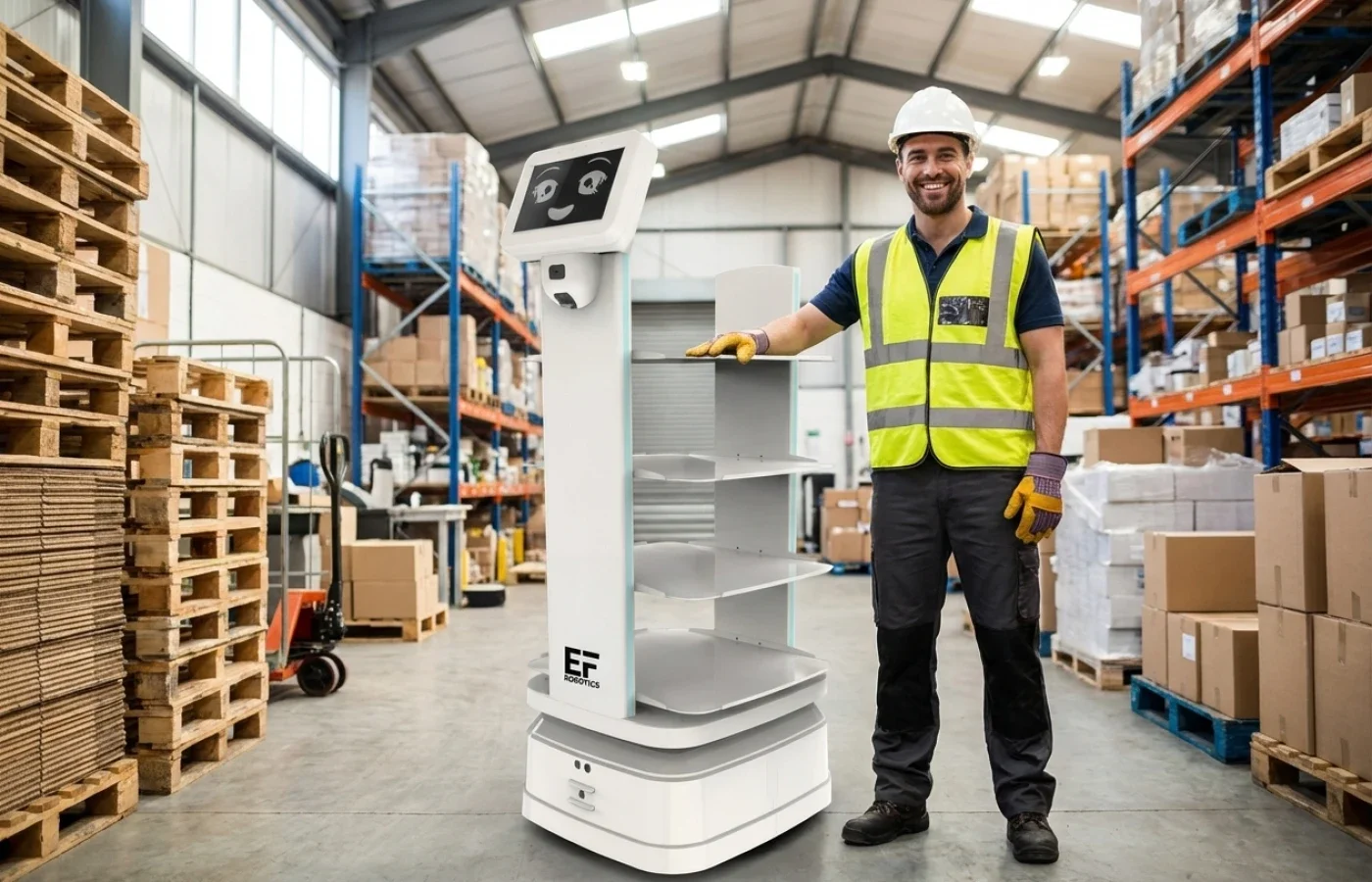
This is followed by Selecting the right robotics. EF Robotics works with renowned Robot manufacturers and component suppliers together without being tied to a specific provider. This ensures that the solution is ideally suited to your requirements. You can choose between industrial robots, collaborative robots, AGV robot, AMR Robots Or even Service robots select for other areas. Care is always taken to ensure that the systems are scalable and facilitate subsequent expansions.
Die Integration into existing processes is carried out with minimal production interruption. This includes adapting the IT interfaces, commissioning the hardware and fine-tuning the software. Digital twins are used to simulate operations in advance and identify bottlenecks. Start-up, training and service graduate: EF Robotics trains your staff, ensures a smooth start and offers long-term support so that you have a competent point of contact even when faced with future challenges.
This structured approach ensures that your project delivers measurable results. The TMG study shows that companies significantly optimize their intralogistics through holistic automation and yet are often reluctant. With EF Robotics as a partner, you can overcome this reluctance and benefit from a future-proof solution.
Digitalization of production as the key to success
Die Digitalization of production opens up enormous opportunities for medium-sized companies. connected robots, AGV robot and AMR Robots increase efficiency, reduce costs and enable flexible production concepts. Digital twins, AI algorithms and integrated IT systems create transparency and allow predictive optimization. Research shows that automation does not lead to job losses, but can actually increase employment. It is therefore crucial for managing directors, plant managers and logistics managers to proactively approach digital transformation.
EF Robotics is your vendor-independent consultant, integrator and long-term partner. Using a structured approach — from analysis to selection, integration to service — we develop individual solutionsthat are a perfect fit for your processes and IT systems. If you want to ensure the future viability of your production, talk to our experts. We'll show you how an intelligent combination of robotics and digitization makes your company more efficient, safer and more competitive.
We would be happy to advise you.
Our team has experience using robots in many areas. Make an appointment and we will be happy to advise you.
